



















BLOG
KATEGORİDEKİ DİĞER YAZILAR
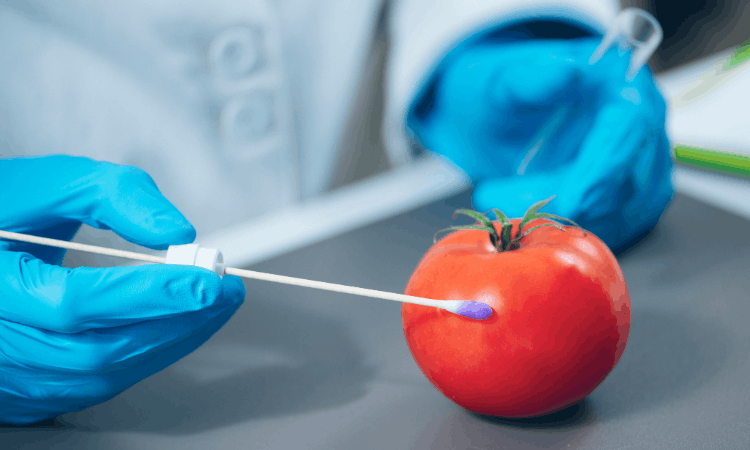
The European Union Rapid Alert System for Food and Feed (RASFF) is a critical early warning mechanism for food safety. A recent RASFF notification revealed that indoxacarb residues well above the legal limit were detected in fresh tomatoes intended for export from Turkey to Romania. This development once again highlights the importance of pesticide control and laboratory analysis in agricultural exports.
According to the official announcement published in the RASFF system, the active ingredient indoxacarb was detected in fresh tomatoes originating from Turkey. The key details of the notification are as follows:
| Information | Details |
|---|---|
| Product | Fresh tomatoes |
| Country of Origin | Turkey |
| Destination Country | Romania |
| Substance Detected | Indoxacarb (insecticide) |
| Exceedance of Limit | 11 times the safe limit |
| Type of Notification | Rejection at the border / Market access denial |
This level of residue prevents the product from entering the EU market and results in significant economic losses for the exporting company.
Indoxacarb is an active ingredient in insecticides used to control harmful insects in agricultural production. Particularly effective against lepidopteran (butterfly and moth) pests, this substance acts on the nervous system, causing insects to become paralyzed and die.
Indoxacarb is widely used on vegetables such as tomatoes, peppers, and eggplants, as well as on field crops such as cotton and corn. However, strict adherence to the recommended dosage, application timing, and pre-harvest waiting period is required.
Scientific studies have identified the potential health effects of high-level exposure to indoxacarb:
For this reason, the consumption of foods containing indoxacarb residues poses a serious health risk, particularly for vulnerable groups.
Indoxacarb is listed among the prohibited active pesticide ingredients in the European Union. The EU has not renewed the authorization for this substance after assessing its potential risks to human health and the environment.
| Parameter | Value |
|---|---|
| Maximum Residue Limit (MRL) | 0.01 mg/kg |
| Legal Status | Prohibited for use |
| Detection Method | LC-MS/MS, GC-MS |
The maximum residue limit established for indoxacarb in the EU is 0.01 mg/kg. This value reflects the lowest detectable level and, in practice, corresponds to a “zero-tolerance” approach.
In Turkey, pesticide residues are regulated by Regulation on Maximum Residue Limits for Pesticides under the Turkish Food Codex. The Ministry of Agriculture and Forestry regularly updates the limit values and the list of banned substances in line with EU legislation.
RASFF notifications have multifaceted consequences for exporting companies and Turkey’s overall export performance:
To prevent such notifications, producers and exporters should pay attention to the following points:
Pesticide residue analyses play a critical role in ensuring food safety and the successful completion of export processes.
Analyses conducted in accredited laboratories:
The detection of indoxacarb in tomatoes intended for export from Turkey to Romania has once again highlighted just how critical quality control and pesticide management are in agricultural exports.
To prevent such incidents:
Food safety is not merely a legal requirement; it is also the foundation of sustainable export success and consumer confidence. Pesticide residue analyses will continue to be one of the most powerful tools for achieving this goal.
For all your requests, contact us.
For the latest news and updates on our services, you can follow us on LinkedIn.
To stay updated on our latest blog posts, follow our Instagram account.