What is Cereulide Toxin? Bacillus cereus and Food Poisoning
Cereulide Toxins and Their Importance in Food Safety
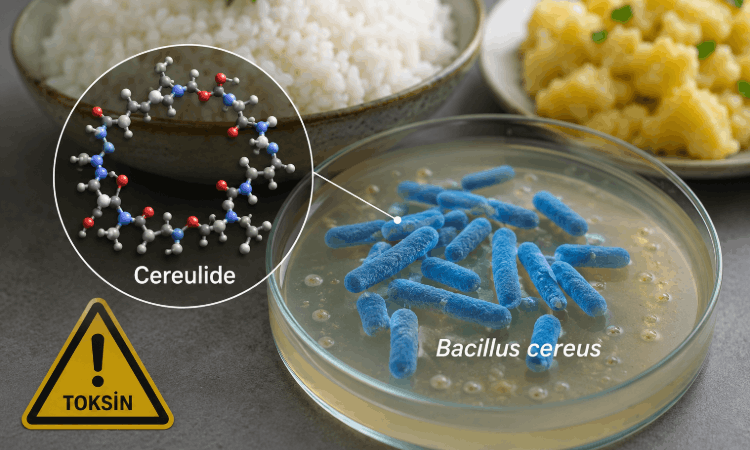
Cereulide Toxins and Their Importance in Food Safety
Cereulide is a highly stable, emetic toxin produced by certain strains of the bacterium “
Bacillus cereus”. This toxin, which can develop particularly in foods not stored under proper conditions, is considered one of the major causes of foodborne illnesses.
What Is Cereulide?
Cereulide is not a bacterium itself, but a toxic compound formed as a result of the metabolic activities of the “
Bacillus cereus” bacterium. This toxin is produced primarily when the bacterium multiplies in foods rich in starch, such as rice, pasta, potatoes, and others.
Its most notable characteristic is its extreme resistance to high temperatures. The cereulide toxin;
- is resistant to thermal processing,
- stomach acid,
- digestive enzymes
. For this reason, reheating the food after the toxin has formed is often insufficient to make it safe. Even if no live bacteria are present in the food, the toxin produced earlier may still be present and pose a health risk if consumed.
How Does Cereulide Form?
Cereulide formation is generally associated with improper storage conditions. In particular, leaving cooked food at room temperature for an extended period provides an ideal environment for bacterial growth and toxin production.
The main risk factors include:
- Leaving cooked meals at room temperature for extended periods,
- Slow cooling of starchy foods such as rice and pasta,
- Failure to maintain the cold chain,
- Inappropriate storage conditions.
In these situations, ‘Bacillus cereus’ can multiply rapidly and begin producing cereulide toxin.
What Are the Symptoms?
Food poisoning caused by cereulide toxin typically appears quickly and is often classified as “emetic-type” food poisoning. The most common symptoms are as follows:
- Severe nausea,
- Sudden onset of vomiting,
- Abdominal pain,
- Diarrhea,
- Weakness.
Symptoms usually develop a few hours after consumption. Fever is generally absent, and the presentation may resemble classic food poisoning. However, due to the toxin’s high stability, serious health complications can arise in some cases.
Cereulide Risk in Infant Formula
The recent detection of the cereulide toxin in some
infant formulas has led to increased inspections worldwide and the issuance of various warnings. This toxin can pose a more serious risk, particularly for infants whose immune systems are not yet fully developed.
Since vomiting and fluid loss in infants can lead to serious consequences in a short period of time, hygiene and temperature control during the production, storage, and transportation of infant formula are of critical importance.
How to Protect Against Cereulide Toxin?
To prevent the formation of cereulide, proper food safety practices must be fully implemented.
- Maintaining the Cold Chain: Cooked meals should be cooled as quickly as possible and stored below 5°C.
- Do Not Leave at Room Temperature: Cooked foods should not be left out for long periods. The risk increases even further, especially during the summer months.
- Proper Reheating: Meals must be heated thoroughly throughout before being consumed again. However, it should be noted that reheating may not always be protective once the toxin has formed.
- Compliance with Hygiene Rules: Adhering to hygiene rules during production, storage, and service processes is crucial for preventing cross-contamination.
Cereulide toxin is a toxin that can form particularly in starchy foods under improper storage conditions and poses significant health risks due to its high resistance.
Proper implementation of food safety practices, maintaining the cold chain, and exercising caution during consumption play a critical role in preventing cereulide-related food poisoning.
For all your questions, contact us at
us.
For the latest news and updates about our services, you can follow us on
LinkedIn.
To stay updated on our latest blog posts, follow our
Instagram account.