
BLOG
KATEGORİDEKİ DİĞER YAZILAR
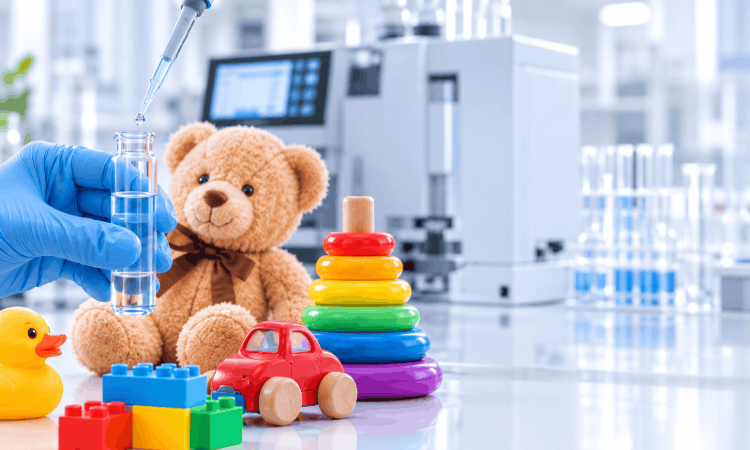
Phthalates are plasticizing compounds used in plastic materials—primarily polyvinyl chloride (PVC)—to provide softness and flexibility. These substances, which are commonly used in toys and children’s products, are strictly regulated due to the potential effects of certain types of phthalates on the endocrine (hormonal) system.
For this reason, phthalate analysis in toys is a critical analytical process for protecting children’s health and ensuring compliance with legal regulations. In this article, we discuss the standard operating procedures used for phthalate analysis and the relevant international standards.
Phthalates are a group of chemical compounds known as esters of phthalic acid. Due to their properties—such as imparting flexibility to plastics and acting as color and odor fixatives—they are used in a wide range of products, including toys, baby products, food packaging, and personal care products.
Certain types of phthalates (particularly DEHP, DBP, BBP, DINP, DIDP, and DNOP) pose a risk to children’s health due to their endocrine-disrupting effects. For this reason, the use of phthalates is legally restricted or banned, especially in baby and children’s toys.
Phthalate testing in toys and children’s products is conducted in accordance with internationally recognized standards. The most prominent standards are as follows:
| Standard | Scope |
|---|---|
| EN 71-5 | Toy safety – Determination of phthalates in toys other than chemical toys (sets) |
| EN 71-9 | Toy safety – Determination of organic chemical compounds |
| ISO 14389 | Textile products – Determination of phthalate ester content |
| CPSC-CH-C1001.09 | U.S. Consumer Product Safety Commission – Standard operating procedure for the determination of phthalates in toys |
The ISO 14389 standard provides a method for determining the total phthalate content in plastic components of toys. Under this standard:
CPSC-CH-C1001.09 is a standard operating procedure published by the U.S. Consumer Product Safety Commission (CPSC) and used for the determination of phthalates in toys. This procedure:
in detail. Compliance assessments under this standard are expected for toys exported to the U.S. market.
Phthalate testing in toys and children’s products is an indispensable analytical process for protecting children’s health and demonstrating regulatory compliance. Standards such as EN 71-5, EN 71-9, ISO 14389, and CPSC-CH-C1001.09 provide a common scientific framework for testing procedures. Analyses conducted in accordance with these standards help ensure products can be safely brought to market by verifying that phthalate levels are below the 0.1% limit.
For all your inquiries, contact us.
For the latest news and updates about our services, you can follow us on LinkedIn.
To stay updated on our latest blog posts, follow our Instagram account.